Asbestos Removal Melbourne: The Complete Guide to Safe and Licensed Disposal

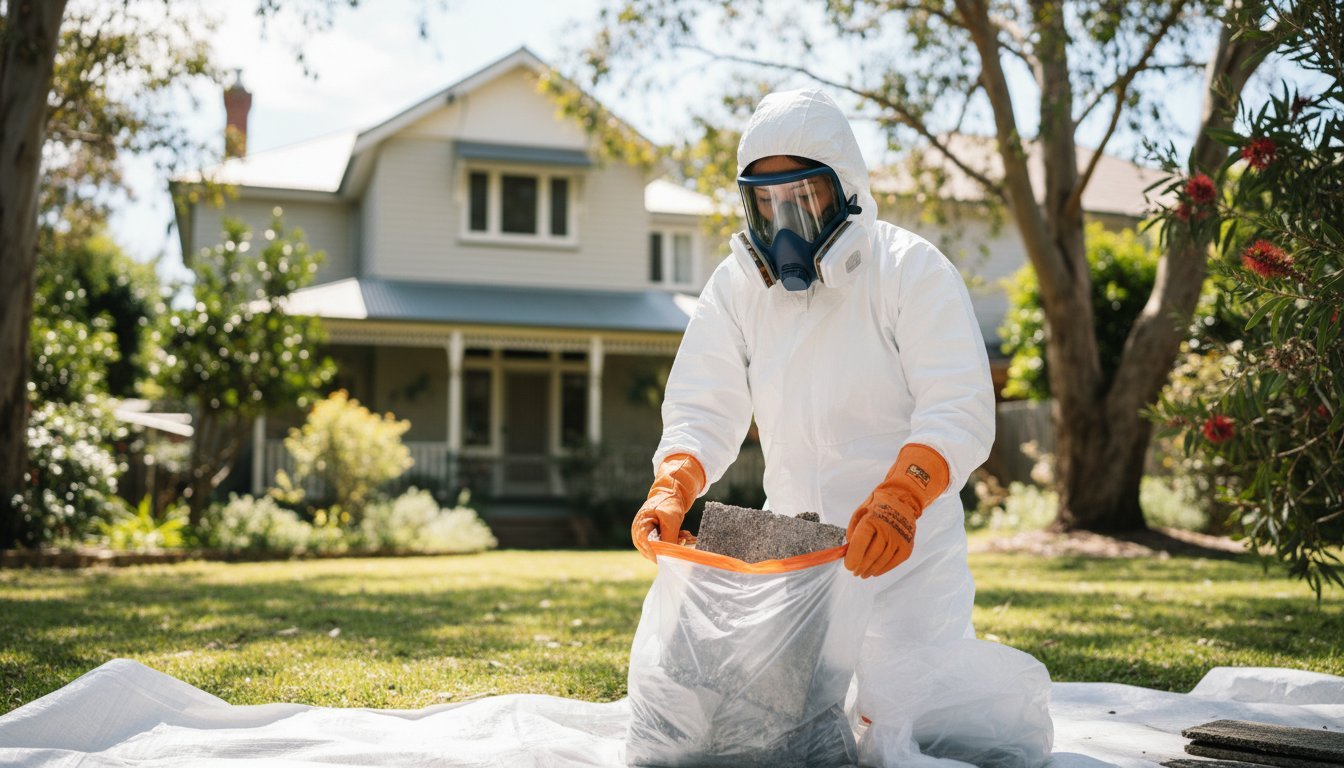

Did you know that approximately one third of all Australian homes built or renovated before 1990 contain asbestos? That means a simple weekend DIY project could expose your family to serious health risks like mesothelioma before you’ve even finished the first room. Professional asbestos removal melbourne services are essential for any local property owner who wants to avoid the stress of hazardous dust and complicated Victorian safety laws.
It’s completely normal to feel overwhelmed by the strict regulations and the confusing difference between Class A and Class B licences. You want a clean, safe property without the worry of hidden disposal fees or dodgy paperwork. This guide gives you the tools to identify hazardous materials, manage the risks, and hire a licensed professional who knows exactly how to handle the waste. We’ll walk you through the entire process so you can find a reliable local tradie and get your home back to its best today.
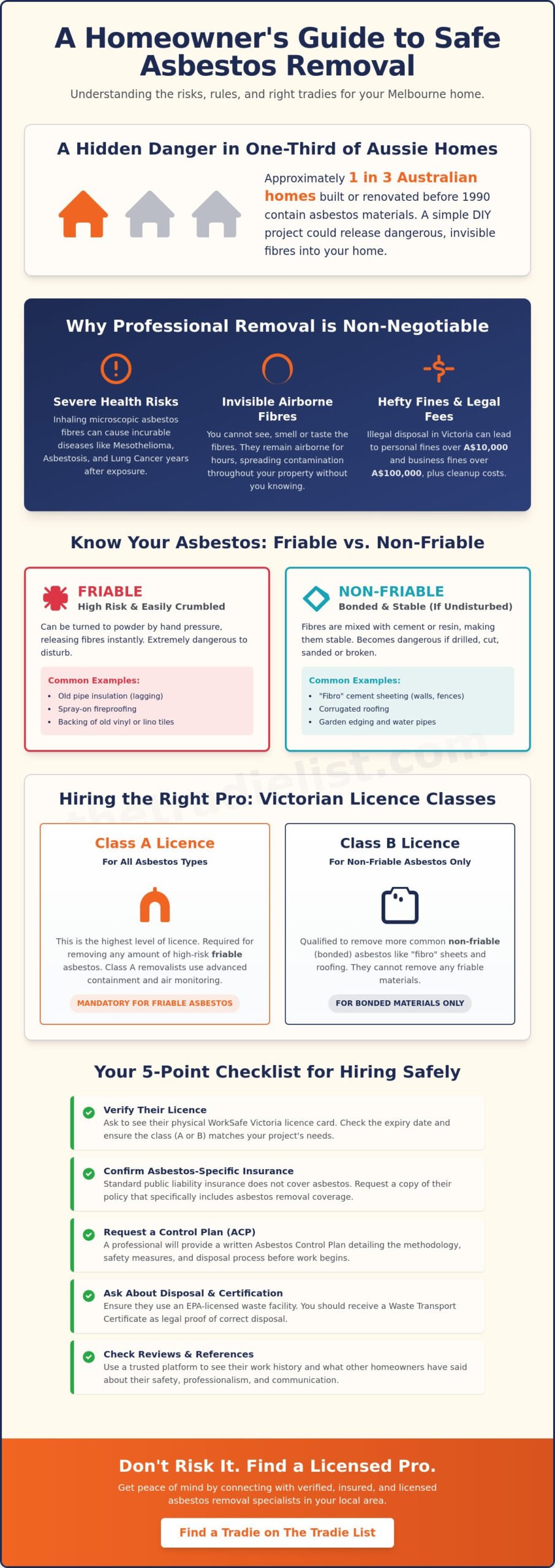
Asbestos was once the “magic mineral” of the Australian building industry. Between the 1940s and the late 1980s, builders used it in roughly one-third of all homes constructed across the country. It was prized for being fire-resistant and incredibly durable, but we now know it’s a silent killer. When you disturb these materials, they break into microscopic fibres that stay airborne for hours or even days. Inhaling these particles leads to incurable diseases like mesothelioma, lung cancer, and asbestosis. Understanding the Risks of Asbestos is the first step to protecting your household. You cannot see, smell, or taste these fibres, making DIY disturbance an invisible gamble with your life. Professional asbestos removal melbourne experts use specialised vacuums and wetting agents to ensure these fibres never enter your lungs.
Aussie homes typically contain one of two types of asbestos. Distinguishing between them is vital for safety:
Friable materials always demand a Class A licensed professional. Don’t take the risk of handling these yourself, as the contamination spreads through a house in minutes.
Cutting corners on disposal isn’t just a health hazard; it’s a financial nightmare. In Victoria, the Environment Protection Authority (EPA) enforces strict rules on how toxic waste is handled. Dumping asbestos in a standard skip bin or leaving it on a nature strip can result in individual fines exceeding A$10,000. For businesses, these penalties often soar past A$100,000.
Homeowners also face massive liability issues. If you expose a neighbour or a tradesman to dust because of poor handling, you could be tied up in legal battles for years. “Doing it on the cheap” often backfires. If a waste facility detects asbestos in a general load, you’ll be charged for the full decontamination of their equipment. These costs frequently hit A$20,000 or more. Using a licensed asbestos removal melbourne service provides you with a Waste Transport Certificate. This document is your legal proof that the material was disposed of at a licensed landfill, protecting your bank account and your reputation.
In Victoria, WorkSafe manages a strict licensing system designed to keep families safe during renovations. You can’t just hire any general labourer for this task. Professional Safe and Licensed Disposal requires specific VET-accredited training and high-level insurance coverage. Licensed tradies must undergo rigorous medical monitoring and prove they have the equipment to handle hazardous dust. If a contractor can’t produce a physical licence card issued by the Victorian government, they aren’t legal. Hiring an unlicensed person for asbestos removal melbourne projects puts your health at risk and can lead to massive fines from local councils.
The 2017 Occupational Health and Safety Regulations dictate exactly who can touch what. These rules ensure that high-risk materials aren’t handled by people with basic tools. Licensed removalists must also have public liability insurance that specifically includes asbestos. Most standard business insurance policies exclude asbestos claims, so verifying this specific coverage is a vital step for every homeowner. Don’t settle for a verbal “yeah, I’m covered” from a contractor. Ask to see the paperwork and check the expiry dates.
Class A is the highest tier of licensing in the Australian system. It’s mandatory for removing any amount of friable asbestos. Friable means the material is easily crumbled or reduced to powder by hand pressure, which releases dangerous fibres into the air instantly. This often includes old pipe lagging, spray-on fireproofing, or certain types of vinyl floor backing. Class A tradies use advanced gear like negative pressure enclosures to seal off the work zone. They also use industrial HEPA-filtered vacuums to ensure no microscopic particles remain. A Class A licence holder is a master of the craft and is also legally permitted to perform all Class B work.
Most residential asbestos removal melbourne jobs involve Class B licences. This category covers non-friable, or “bonded,” asbestos where the total area exceeds 10 square metres. You’ll find these materials in common household spots built before 1990, such as eaves, cement garden fences, and corrugated roofing sheets. These materials are safer to handle because the fibres are locked in a solid matrix like cement. However, a Class B removalist is strictly prohibited from touching friable materials. If they encounter crumbly insulation during a job, they must stop work immediately. You can find local asbestos tradies who hold the correct credentials for your specific home layout through our directory.
Pricing for asbestos removal melbourne is never a “one size fits all” calculation. Because every property has a different layout and varying levels of risk, quotes are tailored to the specific site conditions. Professionals don’t just look at the material; they look at the complexity of the entire environment to ensure safety standards remain high.
Location and accessibility play a massive role in the final figure. If a tradie can easily reach a garden shed, the job is straightforward. However, if the asbestos is located in a tight crawl space, high on a multi-storey roof, or behind structural beams, the labour time increases. Difficult access requires more scaffolding, specialised safety harnesses, and additional man-hours to move the material safely from the site to the transport vehicle.
Disposal fees are another major component of the total cost. In Victoria, asbestos cannot go into a standard skip bin or a local tip. It must be transported to specialised waste centres that are licensed to handle hazardous materials. These facilities charge specific levies based on weight and volume. When you receive a quote, a significant portion of that money goes directly toward these mandatory EPA-regulated disposal fees.
Air monitoring and clearance certificates are often listed as separate costs but are essential for your peace of mind. While the removal itself is the main task, verifying that the air is clean after the job finishes is what makes a site truly safe. These steps provide the documented proof you need to show the job followed every legal requirement.
The total volume of the material, measured in square metres, scales the requirements for both labour and disposal. Larger projects require more heavy-duty plastic wrapping, more tape, and more time for the decontamination process. Condition is equally important. If the material is “weathered” or damaged, it becomes brittle and more likely to release dangerous fibres during the removal process. This requires higher levels of containment and more rigorous safety protocols than intact, bonded sheets.
Asbestos-contaminated dust refers to microscopic fibres that have settled on surfaces like ceiling joists or floorboards over many years, requiring specialised HEPA vacuuming and sealing that adds a layer of technical difficulty to the project.
A clearance certificate is a formal document issued by an independent assessor after a final site inspection. It confirms that the asbestos has been removed correctly and the area is safe to re-occupy. This document is vital for your home insurance and is a non-negotiable requirement for future property resale. Without it, you may find it difficult to prove to potential buyers that the house is hazard-free.
To avoid a conflict of interest, the removalist and the assessor should not be the same person. You want an objective set of eyes checking the work. Engaging Licensed Asbestos Professionals ensures that the independent inspection meets the strict safety standards required by Victorian law. This separation of duties guarantees that no corners are cut and your property remains a safe environment for everyone.
Hiring the wrong person for asbestos removal melbourne can lead to health risks and legal nightmares. You need a professional who treats safety as a priority, not an afterthought. Use this 5-point checklist to interview potential removalists before they step onto your property.
An Asbestos Control Plan (ACP) is your safety roadmap. It details the equipment used, the decontamination process, and how the site will be cordoned off. If a tradie hesitates to provide this, it’s a sign they are cutting corners. Legitimate professionals expect these questions and will have their paperwork ready to show you.
Beware of “cash only” offers or quotes that seem 40% lower than the market average. Licensed disposal at Victorian EPA-authorised sites involves significant gate fees. An unusually low price often means the waste is being dumped illegally in residential bins or parklands, which leaves you legally vulnerable. A professional quote should be transparent and itemised.
Don’t be shy about digging into the details. Ask: “How will you contain the fibres during the removal process?” They should mention heavy-duty 200um plastic sheeting and perhaps negative air pressure units. Ask: “Where is the nearest authorised disposal site you use?” A pro will name a specific facility, like the Bulla or Lyndhurst landfills. Finally, ask: “Is air monitoring included in your quote for this specific job?” For Class A removals, independent air monitoring is a legal necessity to ensure the area is safe for re-entry.
Insurance is where many budget operators fail. Standard public liability insurance often contains an “asbestos exclusion” clause. You must ensure your tradie has specific asbestos liability cover to protect your property. To verify a licence, head to the WorkSafe Victoria website and enter their licence number. This takes two minutes and confirms they are currently authorised to work. A legitimate tradie will never be offended by a request for paperwork. They take pride in their compliance because it proves they are experts in asbestos removal melbourne.
Ready to find a qualified professional? Connect with licensed asbestos removalists on The Tradie List today and get your job done safely.
Finding the right expert for asbestos removal melbourne is a high-stakes task. You need absolute confidence in your contractor’s ability to handle hazardous materials safely. The Tradie List streamlines this search, acting as the fastest bridge between Melbourne homeowners and licensed specialists who understand Victorian safety codes. It’s designed to take the guesswork out of hiring by providing a central hub for verified local talent.
Our “Verified Professional” badge serves as your shortcut to trust. When you see this on a profile, you’re looking at a tradie who has been vetted for quality and reliability. This transparency is vital for high-risk jobs where safety cannot be compromised. By using the platform, you can quickly request and compare multiple quotes. This ensures you receive a fair price for your specific project while maintaining the highest disposal standards. We offer a stress-free solution for homeowners who want the job done right the first time without the usual administrative headache.
Vetting a contractor on your own is time-consuming; it often involves endless phone calls and manual checks of individual licences. The Tradie List does the heavy lifting for you by organising professionals into a searchable, transparent directory. You can view real reviews from local Melbourne residents who have recently used these services. This peer-to-peer feedback provides an honest look at a business’s work ethic and safety record before you ever pick up the phone.
Speed is another major factor for urgent renovations. When you discover asbestos during a home project, you can’t afford to wait weeks for a site visit. Our platform connects you with experts who are ready to start now. This rapid connection prevents project delays and reduces the time your family is potentially exposed to hazardous materials. You get professional expertise and rapid response times in one simple interface.
Your family’s safety is the top priority. Don’t let the presence of hazardous materials linger because the hiring process feels overwhelming. The right professional for your asbestos removal melbourne project is just minutes away. By posting your job details on our platform, you’ll receive leads from qualified tradies who are eager to help you secure your property and provide peace of mind.
Take the first step toward a cleaner, safer home environment. Join the thousands of Victorians who have used our directory to find reliable help for complex tasks. Find a licensed asbestos removalist on The Tradie List now and experience a seamless, professional service that puts your health and safety first.
Managing hazardous materials isn’t just a home improvement task; it’s a critical safety requirement under the Victorian Occupational Health and Safety Regulations 2017. You’ve now seen why distinguishing between Class A and Class B licences is vital for protecting your family from airborne fibres. Professional asbestos removal melbourne services ensure that every trace of contamination is handled according to strict WorkSafe Victoria standards, preventing long-term health risks that often take 20 to 50 years to manifest. Don’t let the complexity of disposal regulations or the fear of hidden costs stall your renovation plans.
The Tradie List makes it easy to find local experts who carry Verified Professional badges. You’ll connect with vetted local tradespeople who understand the specific requirements of Melbourne properties. It’s a stress-free way to compare multiple quotes and ensure your project stays on track and above board. You deserve the peace of mind that comes from knowing the job’s done right by a qualified specialist who values safety as much as you do.
Find a Licensed Asbestos Removalist in Minutes
Take the first step toward a safer home and start your project with confidence today.
You can legally remove up to 10 square metres of non-friable asbestos yourself in Victoria, provided the task takes less than one hour in total. Despite this allowance, WorkSafe Victoria strongly recommends hiring a licensed professional to manage the significant health risks. If the material is friable or exceeds the 10-square-metre limit, you must engage a licensed tradie to handle the disposal and ensure your site stays compliant with safety regulations.
Residential asbestos removal Melbourne costs typically range from A$50 to A$150 per square metre depending on the site accessibility and the material type. For a standard eaves removal, you might pay between A$1,500 and A$2,500. Most licensed contractors charge a minimum call-out fee of A$350 to cover essential setup and decontamination equipment. Always get three quotes from local professionals to ensure you’re getting a fair market rate for your specific suburb.
You cannot identify asbestos just by looking at it; only NATA-accredited laboratory testing provides a definitive answer. If your home was built or renovated before 1990, there’s a high chance it contains asbestos in areas like wet rooms, eaves, or vinyl floor tiles. Testing kits cost roughly A$50 per sample, plus laboratory fees. It’s the only way to protect your family and workers before starting any demolition or renovation work on an older property.
Class A licences allow for the removal of friable asbestos, which is material that can be crumbled into powder by hand. This includes high-risk items like pipe insulation or fireproofing. Class B licences are restricted to non-friable or bonded asbestos, such as cement sheeting and corrugated roofing. For most residential renovations, a Class B licence is sufficient, but Class A removal requires much stricter containment, negative air pressure units, and constant air monitoring.
Stop work immediately and clear the area if you suspect you’ve disturbed asbestos fibres. Seal the room by closing doors and windows, then use duct tape and plastic sheeting to cover any openings or air vents. Don’t vacuum or sweep the dust, as this spreads fibres into the air. Contact a licensed specialist right away to perform an air quality test and professional decontamination to make the site safe for your family and builders.
A clearance certificate is mandatory in Victoria for any removal of friable asbestos or if more than 10 square metres of non-friable asbestos is removed. An independent occupational hygienist or a competent person must issue this document to verify the area is safe to re-occupy. This certificate provides legal proof that the asbestos removal Melbourne project met all safety standards and the site is free of hazardous residue, which is vital for future property sales.
Most residential asbestos removal projects take between one and three days to complete. A simple task like removing an external garden shed might take four to six hours, while stripping an entire house of internal wall linings can take several days. This timeframe includes the setup of containment zones, the actual removal process, and the final industrial vacuuming. Your tradie will provide a specific schedule during the initial site inspection so you can plan your renovation timeline.
Standard home insurance policies rarely cover the cost of removing asbestos during a planned renovation or for general maintenance. However, some policies might cover the cleanup costs if the asbestos is damaged by a covered peril like a fire, storm, or flood. Check your Product Disclosure Statement for specific clauses regarding hazardous materials. Most homeowners find they need to budget for these costs independently when planning a home upgrade to avoid unexpected financial stress.