Air Conditioning Installation Tips: The Ultimate Homeowner’s Guide for 2026


What if your next cooling upgrade slashed your power bill by 40% instead of leaving you in financial shock? Most Australian homeowners expect a cool house to cost a fortune. With energy prices fluctuating, that anxiety is real. You’re likely looking for air conditioning installation tips that actually save you money, especially when choosing between a split system and ducted air. It’s a lot to manage while worrying about finding a licensed tradie who actually shows up on time before the first 40-degree day hits your suburb.
We’ve put together this ultimate guide to help you take back control of your home climate. You’ll learn how to prep your space, compare 2026 efficiency ratings, and hire the right local pro for a seamless job. This article breaks down exactly how to secure a stress-free installation day so you can enjoy a frosty living room without the budget blowout. From understanding unit differences to checking mandatory ARC Tick licences, we’ve got the expert advice you need to get the job done right the first time.
Air conditioning installation is a permanent home improvement that adds significant value to your property. It’s not a simple DIY job. You need a licensed professional with expertise in Heating, ventilation, and air conditioning (HVAC) systems and electrical wiring. Getting the setup right the first time prevents costly repairs and ensures your system runs efficiently for its 10 to 15 year lifespan.
Most Aussie homeowners now choose reverse cycle systems. These clever units provide cooling in the summer and highly efficient heating in the winter. They work by moving heat rather than creating it, which makes them much cheaper to run than old-fashioned electric heaters. When you compare models, look for the Zoned Energy Rating Label. Choosing a unit with a high star rating for your specific climate zone can slash your running costs by up to 30 percent compared to lower-rated models. Use these air conditioning installation tips to narrow down your search before you call a local tradie for a quote.
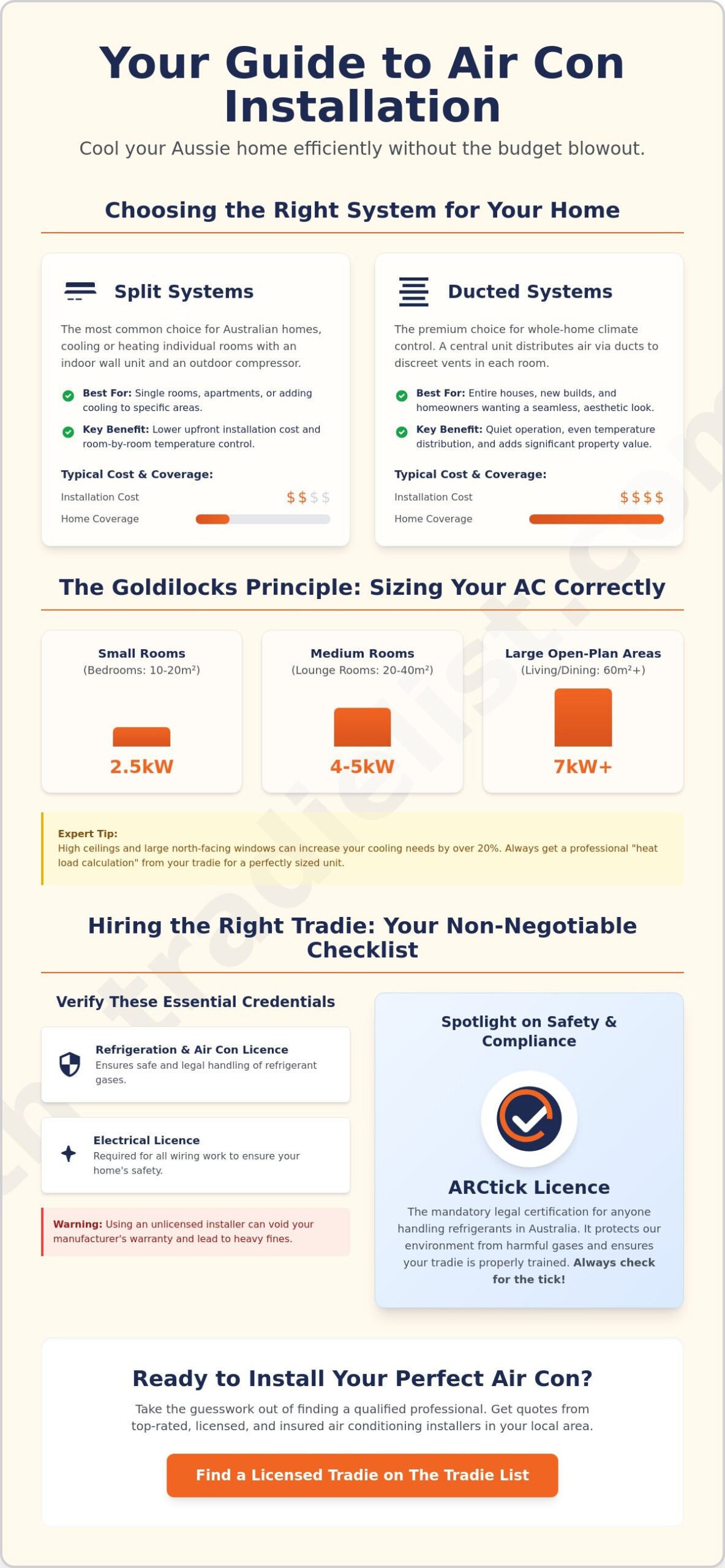
Split systems are the most common choice for Australian homes. They consist of an indoor wall-mounted unit and an outdoor compressor. They offer excellent room-by-room flexibility and are generally cheaper to install. If you want “whole-home” luxury, ducted systems are the gold standard. They use a central unit hidden in the roof to distribute air through discreet ceiling vents. For multi-storey homes where ducting isn’t possible, a multi-head split system is a smart middle ground. This setup connects several indoor units to a single outdoor compressor, saving precious garden or balcony space.
Size matters when it comes to efficiency. An oversized unit will “short-cycle,” turning on and off constantly, which wears out the motor and fails to dehumidify the air. An undersized unit will run non-stop, driving up your power bill without ever reaching the desired temperature. Follow these general sizing guidelines for typical Aussie rooms:
Don’t just look at floor space. High ceilings and large north-facing windows can increase your heat load by 20 percent. A local tradie will perform a proper “heat load calculation” to ensure you get a unit that is just right for your specific home layout.
Searching for air conditioning installation tips often leads homeowners to believe they can save a few hundred dollars by doing the prep work themselves. Stop right there. Installing an air conditioner is not a weekend DIY project. Under the Ozone Protection and Synthetic Greenhouse Gas Management Act 1989, it is illegal for anyone without a specific licence to handle refrigerant gases. You risk heavy fines and, more importantly, you risk your safety. A professional installation ensures the system is vacuum-sealed, leak-tested, and electrically sound.
Before any work begins, verify your chosen professional holds two essential credentials. First, they must have a full Refrigeration and Air Conditioning licence. Second, they need an appropriate electrical licence for the wiring work. Ask for these numbers upfront. You can verify them in seconds via the national licensing databases. Using an unlicensed worker doesn’t just put your home at risk; it effectively turns your expensive new unit into a paperweight if something goes wrong. Most major manufacturers will reject any warranty claim if they cannot see a valid licence number on the installation receipt.
The Australian Refrigeration Council (ARC) manages the ARCtick licensing scheme to stop harmful refrigerant gases from escaping into the atmosphere. These gases have a global warming potential thousands of times higher than carbon dioxide. If an installer is not ARC-certified, they haven’t been trained in the latest containment and recovery protocols. The ARCtick is the mandatory legal certification for anyone handling refrigerants in Australia. Hiring a licensed tradie ensures your system operates at peak efficiency while protecting the environment. Check the technician’s card for the tick of approval before they start the job.
Don’t settle for the first price you receive. Collect at least three detailed quotes to understand the current market rate in your local area. A “Standard Installation” usually refers to a back-to-back setup where the indoor unit sits directly opposite the outdoor compressor. Confirm that your quote includes these specific items:
Before signing a contract, ensure you are Selecting an Energy-Efficient Air Conditioner that matches your room volume to avoid excessive running costs. Always ask if the final price includes the “Certificate of Compliance” for the electrical work. This document is your proof that the installation meets Australian Standards (AS/NZS 3000). Be wary of red flags like “cash-only” deals or tradies who refuse to provide a written quote. These shortcuts often lead to abandoned jobs and zero legal recourse. For a stress-free experience, connect with a local professional who values transparency and quality workmanship.
Location dictates how hard your system works and how much you pay each month. Choosing the right spot is one of the most critical air conditioning installation tips for any Australian homeowner. If you place units poorly, you’ll face higher energy bills and a shorter system lifespan. Efficiency starts with the “shortest run” principle. This means keeping the distance between your indoor and outdoor units as tight as possible. A shorter pipe run reduces the workload on the compressor and keeps your install costs down. Aim for a “back-to-back” setup where the units sit on opposite sides of the same wall. This setup typically costs less and delivers the fastest cooling response.
Noise is another factor that many people overlook until it’s too late. Modern units are quieter, but they still hum. Avoid placing the outdoor compressor near bedroom windows or right against a neighbour’s fence line. In many Australian council areas, noise complaints can lead to strict operating hours or fines. Ensure your tradie leaves enough room for future maintenance too. If a technician can’t reach the service valves easily, you’ll pay more in labour hours later. Accessibility for filter cleaning is just as vital. If you need a three-metre ladder just to reach the indoor unit, you probably won’t clean the filters as often as you should.
Mount your indoor unit high on the wall, ideally between 2.1 and 2.4 metres from the floor. Cold air is heavier than warm air; it needs to fall to circulate properly. Never install a unit directly above electronic devices like TVs or gaming consoles. Even a minor condensation leak can destroy a A$2,500 home theatre setup in seconds. Avoid “dead spots” by keeping the unit away from bulkheads, curtains, or tall furniture that could trap air. If the unit is tucked in a corner, the thermostat will detect a false temperature and shut off before the room is actually cool.
Your outdoor unit needs to breathe. A shaded unit is up to 10% more efficient than one sitting in the direct afternoon sun. However, don’t trade shade for airflow. You need at least 600mm of clear space in front of the fan. If you block the discharge air, the unit will suck its own hot air back in, causing it to work twice as hard. For the best results, follow these mounting steps:
A smooth installation starts long before the van pulls into your driveway. Preparing your space saves time and prevents unexpected labour costs. Most professional split-system installs take between 4 to 6 hours, while ducted systems can take a full day or more. You want your installer focused on the unit, not moving your mountain of garden tools or heavy furniture. Efficiency is the goal here.
Start by clearing the work zones. Tradies need at least 1.5 metres of unobstructed clearance around the indoor head unit and the outdoor compressor site. Safety is paramount. If you have pets or young children, organise a “no-go zone” or have them stay with a neighbour. A curious toddler or a barking dog creates a genuine hazard in a workspace filled with power tools, sharp copper piping, and ladders.
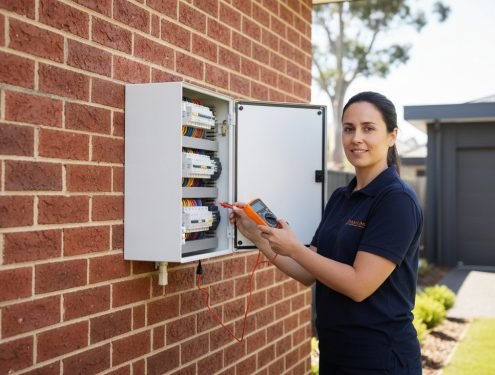
Check your electrical switchboard immediately. Modern air conditioners require a dedicated circuit to prevent your house lights from flickering or tripping. Open the cabinet and look for at least two spare pole spaces. If your board is an older style or completely full, a 2026-compliant upgrade might be necessary to meet Australian Standard AS/NZS 3000. Identifying this early prevents the job from grinding to a halt on the day.
Move your cars out of the driveway first thing in the morning. Tradies carry heavy vacuum pumps, refrigerant canisters, and bulky ladders. Giving them the closest parking spot reduces their transit time and keeps the project on schedule. It also protects your vehicle from accidental scratches during the move-in phase.
In the garden, clear away spider webs, overgrown bushes, or stored items where the outdoor unit will sit. If you’re getting a ducted system, ensure the manhole or crawl space is completely accessible. Clear out the hallway or cupboard where the ceiling access is located. You don’t want a tradie trying to balance on a ladder while dodging your stored suitcases or linen collection.
Installation involves drilling through brick, timber, and plaster. It’s a messy business. Cover your lounge furniture, rugs, and electronics with drop sheets or old blankets. While most professional installers bring their own protection, having your gear ready ensures total coverage of your valuables. Dust from brickwork is notoriously difficult to lift once it settles into fabric.
Discuss the “core hole” location before the drill hits the wall. This is one of the most vital air conditioning installation tips for avoiding structural issues. Confirm the path is clear of hidden wall studs, water pipes, or internal wiring. Finally, ensure there’s an active power point nearby. Your tradie will need it for their vacuum and power tools to keep the site clean as they go.
Once the outdoor compressor is bolted down and the indoor unit is humming, it’s tempting to sit back and enjoy the chill. However, the final 30 minutes of the job are the most critical for your long-term peace of mind. Following these final air conditioning installation tips ensures your system survives the brutal Australian summer for the next 15 years. Start by performing a complete run-through with your installer. Modern systems in 2026 often come with complex Wi-Fi controllers and multi-stage filtration settings. Don’t guess how they work. Ask the tradie to walk you through the remote functions while they’re still on-site.
Check the exterior drainage pipe immediately. It should be directed away from the house foundations and shouldn’t create a slip hazard on your walkways. In Australia, poor drainage can lead to mould growth or even structural issues over time. Collect all your paperwork before the van pulls out of the driveway. This includes the manufacturer’s warranty and, crucially, a Certificate of Compliance. This document is your legal proof that the work meets Australian Standards and is often required for insurance claims or when selling your home.
Establish a simple maintenance routine now to keep the unit running like new. Set a calendar reminder to vacuum your filters every three months. For most Australian households, a professional service every 12 to 24 months is the sweet spot to keep the refrigerant levels topped up and the coils grime-free.
Use this quick list to ensure the job is finished to a professional standard:
Great air conditioning installation tips only work if you have a skilled professional behind the tools. If you’re still in the planning phase or need a specialist for your next project, we’ve made the search simple. Our directory connects you with verified, local AC specialists across Australia in minutes. You can skip the endless searching and focus on pros who have already proven their worth. Reading real reviews from other Aussie homeowners gives you the confidence that your installer knows their stuff. Find a licensed AC installer near you today on The Tradie List and get your climate control sorted before the next heatwave hits.
Getting your cooling sorted doesn’t have to be a headache. By focusing on strategic placement and selecting a system sized correctly for your floor plan, you can reduce energy consumption by up to 15% based on standard Australian energy efficiency ratings. It’s vital to ensure your installer holds a full ARCtick licence; this is a legal requirement in Australia for anyone handling refrigerants. Following these air conditioning installation tips helps you avoid common pitfalls and keeps your home comfortable when the mercury hits 40 degrees.
Don’t leave your comfort to chance. You can browse through verified business listings across Australia to find the perfect match for your renovation or build. It’s a fast, reliable way to connect with experts who know the local climate and regulations. Find a verified local air con installer on The Tradie List now. Our platform is free for homeowners and connects you with ARCtick licensed professionals in minutes. Get your installation booked today and enjoy a stress-free, chilled-out summer.
No, you cannot legally install your own air conditioner in Australia. It is a criminal offence to handle refrigerants without a specific license under the Ozone Protection and Synthetic Greenhouse Gas Management Act 1989. You also risk voiding the manufacturer’s 5-year warranty and face potential fines of up to A$13,320 for unlicensed work. Always hire a licensed tradie to ensure the system meets Australian Standard AS/NZS 3000.
A standard back-to-back split system installation usually takes between 4 and 6 hours to complete. If you’re opting for a full ducted system, the process generally takes 1 to 3 days depending on the size of your home and roof access. Complex jobs involving multi-storey houses or difficult mounting positions can add 2 to 4 hours to the total timeline. Your installer can provide a precise schedule after a site inspection.
An ARCtick license is a mandatory certification issued by the Australian Refrigeration Council (ARC) to qualified professionals. It proves your installer is legally authorised to handle fluorocarbon refrigerants that are harmful to the environment if leaked. Following professional air conditioning installation tips means checking for this license to ensure your system is gas-tight. Choosing a licensed tradie protects you from poor workmanship and ensures your home stays compliant with national environmental laws.
You will likely need a switchboard upgrade if your home was built before 2000 or still uses ceramic fuses. Modern air conditioners require a dedicated circuit and a 15 to 20 amp safety switch to operate safely without tripping your power. An electrician must verify that your board meets current AS/NZS 3000 standards before the unit is powered on. This essential safety upgrade prevents electrical fires and protects your new investment from power surges.
Your outdoor unit requires at least 100mm to 300mm of clearance from the rear wall and 600mm of clear space on both sides. The front of the unit needs a minimum of 1000mm of unobstructed space so the fan can exhaust hot air efficiently. Without these specific gaps, the compressor works 20% harder than necessary. This leads to higher electricity bills and can shorten the lifespan of the unit by several years.
Split systems are the best choice for cooling individual rooms or smaller spaces under 100 square metres. They are affordable and offer flexible cooling for specific zones like bedrooms or home offices. Ducted air conditioning is superior for larger family homes where you want consistent temperatures across 4 or more rooms. While ducted systems involve a higher initial cost, they provide a seamless look and add significant value to your property.
A professional quote must include the exact model number, the kilowatt capacity, and the length of the copper piping run. It should also list the cost of the electrical circuit, mounting brackets, and the removal of any old equipment. Make sure the document specifies the 5-year manufacturer warranty and the installer’s own workmanship guarantee. These air conditioning installation tips help you compare quotes accurately and avoid hidden costs during the project.
You should book a professional service for your air conditioner once every 12 months. Scheduling this maintenance in autumn or spring ensures the system is ready for the extreme heat of the Australian summer. Regular servicing prevents the 5% efficiency drop that typically occurs each year due to dust build-up. You should also clean the internal filters yourself every 4 weeks to maintain high air quality and reduce pressure on the motor.