Cost Guide for Hiring an Electrician 2026: What to Expect in Australia


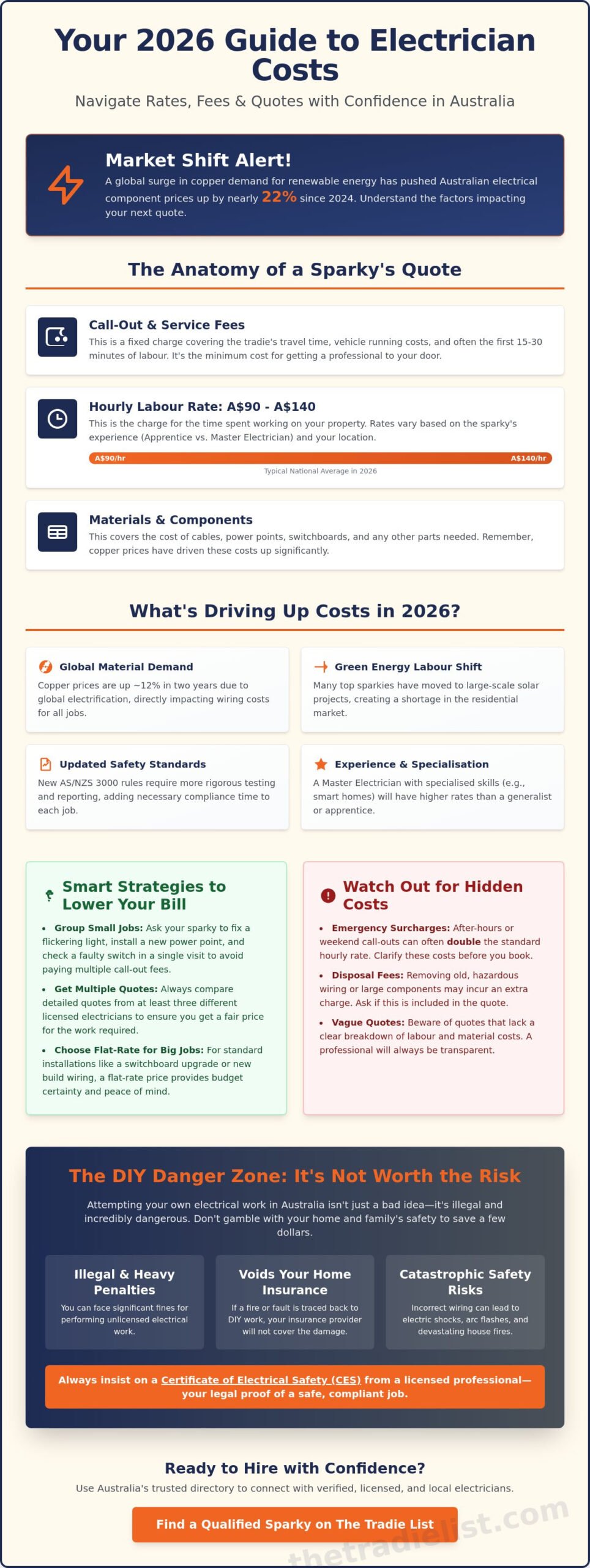
Did you know that the global surge in copper demand for renewable energy has pushed Australian electrical component prices up by nearly 22% since 2024? It is a startling figure that explains why your last quote might have looked a bit different than expected. You are likely tired of the guesswork involved in booking a sparky, especially when unexpected call-out fees or confusing hourly rates start to pile up. It is frustrating to feel like you are paying a premium without understanding the actual market value of the work.
This cost guide for hiring an electrician 2026 gives you the clarity you need to budget with confidence. We provide a clear, up-to-date breakdown of current Australian electrical rates and job-specific costs so you can avoid overpaying. You will learn how to distinguish between value-for-money quotes and overpriced services while getting a handle on why smart tech integration costs have shifted this year. We are diving into standard price ranges for common domestic tasks and sharing expert tips to help you secure a reliable tradie for your next project.
Australian homes are evolving rapidly. We have moved beyond basic power points to complex smart-home ecosystems, integrated EV charging stations, and sophisticated energy management systems. When you look for a cost guide for hiring an electrician 2026, it is vital to understand these technical shifts alongside the current economic climate. You are likely feeling the pressure of rising grocery bills and mortgage rates, yet maintaining your home’s electrical integrity remains a non-negotiable priority for your family’s safety.
Hiring a licensed Electrician ensures your property stays compliant with strict Australian standards. It is the only way to protect your property value and ensure your insurance provider honours your policy if a fault occurs. Professional sparkies bring the right tools and the latest training to handle modern high-voltage demands safely.
Prices for raw materials have seen a steady climb. Copper prices, a primary driver for cabling costs, have fluctuated with a general upward trend of approximately 12 percent over the last two years due to global electrification demands. This directly impacts the quote for even simple rewiring jobs. Additionally, the massive national push toward green energy has created a specific labour vacuum. Many experienced professionals have moved into large-scale solar and battery storage sectors, leaving a shortage in the residential market. This scarcity of specialised labour naturally pushes general residential rates higher. You will also notice that updated AS/NZS 3000 standards now require more rigorous safety reporting and testing. These administrative requirements add necessary time to every job, which is reflected in the modern pricing structure.
Attempting your own electrical work in Australia is illegal and carries heavy penalties. Beyond the legalities, DIY fixes immediately void your home insurance coverage. A single mistake in a junction box can lead to catastrophic arc flashes or faulty earthing that puts everyone in the building at risk. A pro will always issue a Certificate of Electrical Safety (CES) once the work is complete. This document is your legal proof that the installation is safe and compliant. Don’t gamble with your family’s safety to save a few dollars. It’s much smarter to find a tradie australia who can provide a transparent quote and guaranteed results. Using a reliable cost guide for hiring an electrician 2026 helps you budget effectively while ensuring you get the expert service your home requires. Connect with a local professional now to keep your home running efficiently and safely.
Understanding your sparky’s invoice shouldn’t feel like decoding a secret language. When you review a quote, you’ll usually see two main figures: the call-out fee and the hourly rate. A call-out fee is the price you pay for the electrician to show up at your door; it covers their time on the road and vehicle overheads. In contrast, the hourly rate applies strictly to the time spent fixing your lights or wiring. Many Australian businesses now use service fees instead, which typically bundle the travel costs and the first 30 minutes of labour into one flat upfront charge. A minimum call-out is the baseline cost for any professional visit.
You need to choose between flat-rate pricing and traditional hourly billing. Hourly billing works well for small, unpredictable repairs where the problem isn’t immediately clear. However, flat-rate pricing offers budget certainty for standard installs. Watch out for hidden costs that can sneak onto your final bill. These often include disposal fees for old hazardous wiring or heavy surcharges for emergency after-hours call-outs, which can double the standard rate. As the Australian Government moves toward a national licensing scheme for electrical trades, hiring a qualified professional ensures these fees are transparent and justified.
For this cost guide for hiring an electrician 2026, expect national average rates to sit between A$90 and A$140 per hour. This range fluctuates based on the tradie’s experience level and business structure. You’ll pay a premium for a Master Electrician compared to a sole trader or an apprentice because of their advanced expertise and insurance coverage. Complex jobs that require specialised gear, such as thermal imaging cameras for fault finding, also command higher hourly premiums. If you live outside a major metropolitan centre, remember that regional travel often incurs a per-kilometre surcharge to cover the extra time spent on the road.
Fixed pricing is your best friend for large-scale projects like a full house rewiring or a switchboard upgrade. These quotes provide a total figure for the entire job, which helps you manage your renovation budget without surprises. A professional fixed quote must include materials, labour, and GST. Be careful with “provisional sums” in your contract. These are estimates for parts of the work that haven’t been fully scoped yet; they often lead to budget blowouts if the work becomes more complex than expected. Always get three separate quotes to establish a fair market baseline for your specific project before signing any paperwork.
If you’re ready to compare local rates, you can find a local electrician through our directory to get your project moving today. Using a cost guide for hiring an electrician 2026 helps you stay informed, but a direct quote is the only way to lock in a price for your home.
Budgeting for electrical work requires a clear look at current market rates. This cost guide for hiring an electrician 2026 outlines what you can expect to pay for typical residential tasks. Prices vary depending on your location, the age of your property, and how easily a tradie can access your wiring. For those living in older homes, securing Electrical Safety Leads is essential to identify potential hazards before they become expensive emergencies. Most tasks fall into three categories: minor maintenance, safety upgrades, and new installations.
Minor maintenance and small additions are common requests for local sparkies. Installing a single new power point typically costs between A$120 and A$250. You’ll often get a better deal by grouping multiple installations into one visit. Lighting has shifted toward energy-efficient LED downlights, which offer long-term savings on your power bill. If you’re looking at ceiling fans, a simple replacement of an existing unit is straightforward. However, installing a fan where no wiring exists requires more labour, increasing the price. Don’t forget smoke alarm compliance. Interconnected photoelectric alarms are now the Australian standard for modern home safety.
Large-scale safety upgrades are a significant but necessary investment for property longevity. Full house rewiring in 2026 generally ranges from A$5,000 to over A$15,000 for larger dwellings. This is especially true for heritage homes with lath-and-plaster walls or tight crawl spaces that demand extra time. “In 2026, a standard switchboard upgrade remains the single most effective safety investment for an Australian home.” Expect to pay between A$800 and A$1,800 for a new board including modern RCDs and circuit breakers. Upgrading is vital if you still have old ceramic fuses, as they aren’t designed to handle the load of modern induction cooktops.
As Australia moves toward a greener grid, new installations for EV chargers have become a top priority. Installing a Level 2 home charger usually costs between A$800 and A$2,000 for labour, excluding the charging unit itself. Your home might need a dedicated circuit or load management system to prevent overloading your main supply. Smart home tech is also seeing huge growth. Wiring a central hub or automated lighting system varies based on complexity, but the ROI is clear. Smart sensors and automated dimmers can reduce annual electricity bills by up to 15 percent by ensuring lights aren’t left on in empty rooms.
Managing your project budget doesn’t mean hunting for the lowest possible quote. It’s about maximising every minute the professional is on your property. Following a clear cost guide for hiring an electrician 2026 helps you avoid common financial traps. The most effective strategy is grouping small jobs together. Most sparkies charge a call-out fee ranging from A$80 to A$160. If you call them three times for three small repairs, you’re paying that fee every time. Bundle your socket repairs, light installations, and safety checks into a single visit to save hundreds.
You can also save money by purchasing your own fixtures. Buy your designer pendant lights or ceiling fans from a retail centre yourself. This avoids the tradie’s markup on materials. However, always let the professional supply the “rough-in” materials like cables, conduits, and switchgear. They know which brands meet Australian Standards and provide the best longevity. For specialized automation needs, sourcing genuine components from InstroDirect ensures you are using high-quality, reliable equipment. Before the work starts, create a written “scope of work” document. Clearly listing every task prevents “scope creep,” where extra bits and pieces added during the day cause your final bill to balloon unexpectedly.
Labor is your biggest expense. In 2026, hourly rates for skilled electrical work often sit between A$90 and A$130. Don’t pay a professional to move your couch or clear out your pantry. Ensure every work area is accessible before they arrive. If they need to get into the ceiling, have the ladder path clear. Label your switchboard clearly using a permanent marker. A well-labelled board can save 20 minutes of circuit testing. Write down a list of all known issues or symptoms. This simple step can shave 30 minutes off diagnostic time, putting money back in your pocket.
Smart preparation is the most effective way to use this cost guide for hiring an electrician 2026 to your advantage. While a cheap quote is tempting, it often leads to higher costs later. A “Verified Professional” with a slightly higher hourly rate usually works faster and cleaner than an inexperienced operator. For instance, established teams like Inlightec Electrical Solutions focus on delivering long-term value through safety and precision. Always ask two vital questions: “Are you fully insured?” and “Will you provide a Certificate of Electrical Safety?” In Australia, poor workmanship is a leading cause of domestic electrical fires. Cutting corners on price increases your risk of future repair bills and insurance complications. High-quality work ensures your home remains safe and compliant with the latest regulations.
Ready to get your project started with a pro? Find a local sparky and get an accurate quote in minutes.
You have worked through the data in this cost guide for hiring an electrician 2026. Now you need to turn those numbers into a successful project. Finding a sparky is about more than just the lowest bid. It is about safety, local expertise, and long term reliability. A cheap job often costs more later if it doesn’t meet Australian standards. Hiring a verified professional ensures your home stays safe and your insurance remains valid.
Finding a reliable sparky shouldn’t feel like a gamble. The Tradie List connects you with local experts who understand the specific electrical needs of your suburb. Look specifically for the Verified Professional Badge on member profiles. This badge shows the tradie has been vetted, giving you instant peace of mind. You can compare multiple quotes in minutes without the stress of endless phone calls. Don’t skip the local reviews. Reading about a tradie’s punctuality and communication from your neighbours is the best way to ensure a smooth experience.
The work isn’t truly done when the lights flick on. You must ask for a Certificate of Electrical Safety (COES). In Australia, this is a legal requirement for most electrical work. It proves the installation meets AS/NZS 3000 standards. This document is essential for insurance purposes and if you decide to sell your home later. Use our Lead Management App to store these certificates and keep a digital history of your home maintenance. Finally, take a moment to leave a review. Your feedback helps the community find quality help and rewards tradies who take pride in their craft.
Following this cost guide for hiring an electrician 2026 helps you budget accurately. Using a trusted platform ensures the person walking through your door is a qualified pro. Start your search now and get your electrical projects sorted with confidence.
Managing your home maintenance starts with clear expectations and a solid plan. This cost guide for hiring an electrician 2026 provides the framework you need to budget for everything from minor repairs to major rewiring jobs across Australia. Remember that quality workmanship relies on verified credentials; always prioritise sparkies who carry current A-Grade licences and comprehensive public liability insurance. By comparing detailed quotes and understanding the difference between flat rates and hourly fees, you’ll stay in control of your spending throughout the year. Expert planning today prevents expensive emergency call-outs tomorrow.
Finding the right professional shouldn’t take hours of scrolling. You can now access thousands of verified Australian tradies through a platform built for speed and reliability. Experience a transparent quoting process with no hidden platform fees to worry about. Every expert featuring the Verified Professional Badge has undergone rigorous licence and insurance checks, so you know your property is in safe hands. Find a verified local sparky and get quotes in minutes on The Tradie List. It’s time to tick those electrical jobs off your list with confidence and ease.
Expect to pay between A$90 and A$145 per hour for a licensed electrician in 2026. Rates can fluctuate based on factors like demand and cost of living in different areas, with some regions experiencing higher charges. This hourly fee covers the professional’s overheads, insurance, and specialised tools. Use this cost guide for hiring an electrician 2026 to plan your budget for residential repairs or larger home renovations.
Call-out fees cover the travel time, vehicle fuel, and administrative costs of bringing a tradie to your property. Most Australian electricians charge a standard call-out fee between A$100 and A$180. This ensures the business remains profitable when attending to 15-minute tasks like replacing a single faulty power point. Many local professionals include the first 30 minutes of labour within this initial fee to provide better value.
Installing a Tesla Wall Connector or similar EV charger typically costs between A$900 and A$2,800 for labour and materials. Your final price depends on the distance between your switchboard and the charging point. If your home requires a 3-phase power upgrade to support faster charging, costs can increase by another A$2,000. Data from 2025 shows that most standard garage installations are completed within four hours.
Supplying your own fixtures might save you the 10% to 20% markup a tradie applies to materials, but it often complicates the job. Most sparkies prefer to supply their own gear because they can guarantee the quality and handle any warranty replacements directly. If you provide a faulty light, you’ll still pay the full hourly rate for the time spent installing and then removing the defective unit.
A standard switchboard upgrade takes between 4 and 8 hours and costs from A$1,200 to A$2,600. This essential project involves replacing old ceramic fuses with modern RCDs and circuit breakers to meet AS/NZS 3000 safety standards. It’s a vital safety step for older Australian homes. The total price varies depending on whether your mains power cable also needs an upgrade to handle modern electrical loads.
No, you cannot legally perform any electrical “rough-in” work or cabling yourself in Australia. All fixed electrical wiring must be done by a licensed professional to comply with state safety legislation. Doing this work yourself can lead to fines exceeding A$40,000 and will likely void your home insurance policy. It’s always safer and cheaper in the long run to hire a qualified tradie for every stage of the project.
Stop any further payments and contact your state’s electrical regulator if a tradie won’t issue a Certificate of Compliance. This document is a legal requirement for all fixed electrical work in Australia. It proves the work is safe and meets national standards. You’ll need this certificate for future insurance claims or when you eventually decide to sell your property. You can find contact details for your local regulator on The Tradie List or via a quick online search.
Emergency electrical work on weekends or public holidays usually incurs a premium rate of 1.5 to 2 times the standard hourly fee. You should expect a higher call-out fee for after-hours service, which often starts at A$250. This cost guide for hiring an electrician 2026 suggests asking for a fixed emergency quote over the phone. Most tradies will provide a clear breakdown of these urgent rates before they head to your door.