Bathroom Tiling Melbourne: 2026 Design Trends and Homeowner Guide


What if your brand-new renovation actually devalued your property because of a single missing waterproofing certificate or a trendy tile that’s impossible to maintain? You likely want a space that feels like a luxury retreat, yet the fear of “shonky” tradies and leaking showers is enough to stall any project. It is common to feel overwhelmed by the choice between porcelain and ceramic, especially when you are trying to balance a budget with the desire for a high-end finish. You deserve a result that looks incredible and stays bone-dry for decades.
This guide simplifies your bathroom tiling melbourne project by blending the latest 2026 design trends with strict Australian Standard AS 3740 requirements. We promise to help you navigate the process so you can hire a licensed professional with total confidence. You will discover the upcoming aesthetics that define 2026, understand the practical differences in materials, and learn exactly how to ensure your renovation adds maximum value to your home. We’ll cover everything from tactile textures to the essential compliance steps that protect your investment.
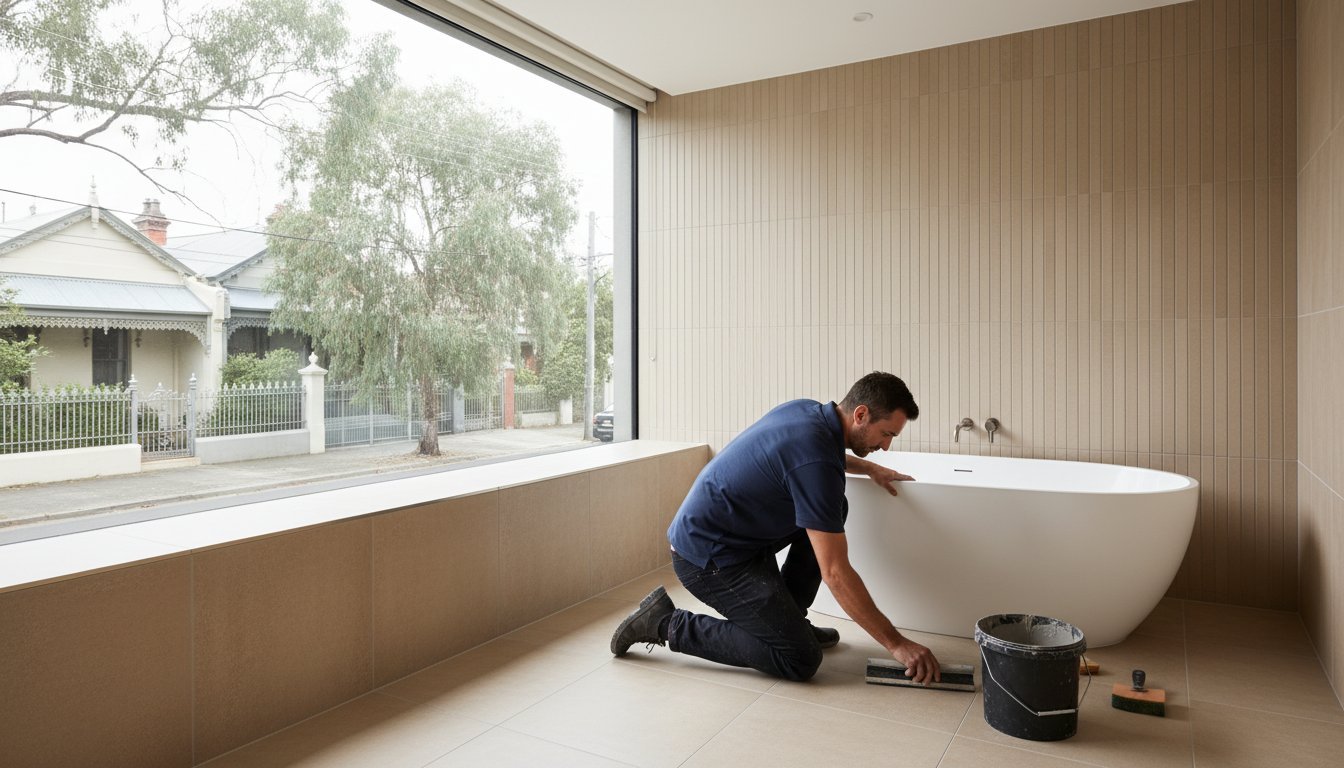
Melbourne homeowners are moving away from clinical, high-gloss finishes. For 2026, the local market focuses on “Tactile Minimalism.” This trend prioritises how a surface feels under your hand or feet. Matte finishes and 3D textures now define modern bathroom tiling melbourne projects. These choices reduce glare and hide water spots better than traditional polished surfaces, making them a practical choice for high-traffic family homes.
Earth-toned palettes dominate Australian designs this year. Expect to see plenty of terracotta, eucalyptus green, and sandy ochre. These colours connect indoor spaces with the rugged Australian landscape. Sustainability is another driving force for 2026. Industry data from the 2024 Australian Construction Industry report shows a 15% increase in demand for eco-friendly materials compared to previous years. Homeowners now actively seek out recycled glass tiles and eco-certified porcelain. To understand the different compositions available for your project, you can read this comprehensive overview of tile materials which covers the fundamental properties of ceramic, porcelain, and stone.
Large-format slabs represent a major shift in local styling. By using tiles as large as 1200mm x 2400mm, you minimise grout lines significantly. This creates a seamless, stone-slab look and slashes your weekly cleaning time. It’s a smart solution for busy Melbourne residents who want a luxury hotel aesthetic without the maintenance headache. To extend this premium feel beyond the bathroom, many residents also invest in high-quality outdoor transitions; for instance, a well-placed deck using materials from greenhilltimbers.com.au can create a beautiful, cohesive flow between your interior and exterior living spaces.
Handmade imperfections are back in a big way. Zellige-style tiles are a 2026 staple for feature walls because their uneven surfaces and tonal variations catch light in unique ways. This creates a “spa-at-home” atmosphere that feels organic rather than mass-produced. For a balanced look, pair these heavily textured wall tiles with smooth, large-format floor tiles. This contrast prevents the room from feeling visually cluttered while adding necessary depth to the design.
Metallic finishes are moving beyond just the taps and showerheads. We’re seeing a rise in brushed brass and copper tile trims that frame feature sections or niches. These accents complement popular Australian tapware finishes perfectly. You can even enhance the look with metallic grout additives. These provide a subtle, sophisticated shimmer in wet areas. Choosing tile colours like deep charcoal, navy, or warm cream helps these metallic details stand out. It’s an efficient way to add a premium feel to your bathroom tiling melbourne renovation without a complete overhaul.
Choosing the right material for your bathroom tiling Melbourne project impacts both the look and the lifespan of your renovation. You need to decide between ceramic and porcelain early on. Ceramic tiles are generally more affordable and easier to cut, but they absorb more water. Porcelain is the superior choice for wet areas because it has a water absorption rate of less than 0.5%. This density makes it incredibly resistant to moisture and stains.
Vitrified tiles represent the gold standard for high-traffic Melbourne homes. These tiles undergo a vitrification process where silica and clay melt together at temperatures exceeding 1,200 degrees Celsius. This creates a glass-like element throughout the tile, making it exceptionally hard-wearing. If you want a floor that survives decades of family use, vitrified options are your best bet. Safety is non-negotiable in a wet zone. You must check the slip resistance ratings, known as P-ratings. The Australian Tile Council sets the benchmarks for these standards to protect homeowners. For most residential bathroom floors, a P3 or P4 rating is the industry recommendation to prevent slips when the surface is wet.
Porcelain is a favourite for Australian renovations due to its incredible durability. You can choose between glazed and full-body porcelain. Full-body porcelain has the colour and pattern running through the entire thickness of the tile. This means if you accidentally drop a heavy bottle and chip the surface, the damage is almost invisible. Glazed porcelain offers more complex patterns and finishes but the colour is only on the surface layer. To keep your porcelain looking new, skip the harsh chemicals. Use a pH-neutral cleaner and a microfibre mop to maintain the factory finish for 20 years or more.
Natural stone like marble, travertine, and slate offers a timeless, high-end aesthetic. It’s important to remember that stone is naturally porous. You must seal natural stone every 12 to 24 months to prevent water ingress and deep staining. You can’t use standard household bleach on these surfaces as it causes permanent “etching” or dull spots. Stone is a premium choice requiring expert installation to ensure the weight is supported and the veins are matched correctly. If you’re unsure which material fits your budget, you can find a local tiler to help you compare samples in person.
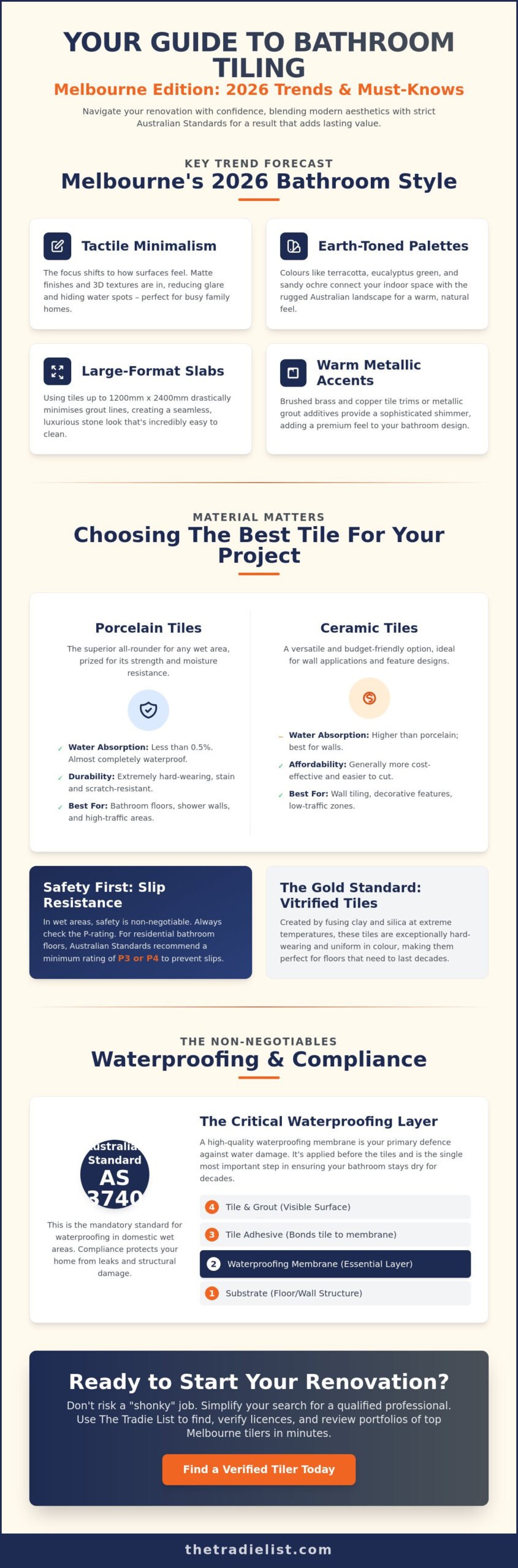
Success in any bathroom tiling melbourne renovation starts with what you can’t see. Australian Standard AS 3740 (Waterproofing of domestic wet areas) dictates exactly how your bathroom must be sealed to prevent structural rot. In Victoria, the Victorian Building Authority (VBA) requires a compliance certificate for any plumbing or building work that exceeds A$750 in value. This document is your proof that the work meets national safety standards and is essential for insurance claims or future property sales.
Waterproofing failures remain the most common building defect in Australia. According to industry data, waterproofing issues account for 80% of all building complaints despite representing less than 2% of total construction costs. These issues usually stem from poor surface preparation or rushing the curing process. A single pinhole in the membrane can lead to thousands of dollars in damage over just a few months. Professional tradies ensure the substrate is clean, dry, and primed before the first drop of sealant touches the floor.
The membrane acts as a flexible, watertight skin beneath your tiles. Most Melbourne renovations use liquid-applied membranes because they easily contour to floor wastes and niches. Sheet membranes offer high durability and consistent thickness but require expert handling at the seams. Don’t attempt DIY waterproofing. Most Australian insurers will reject claims for water damage if a licensed professional didn’t install the membrane and provide a certificate of compliance. It’s a risk that simply isn’t worth the small initial saving.
Tiles are waterproof, but traditional cement-based grout is porous. For a high-performance bathroom tiling melbourne installation, consider epoxy grout. It’s 100% non-porous and resists mould growth. This makes it a superior choice for shower floors and heavy-use wet areas where water sits for long periods. While it takes longer to apply, the longevity is unmatched.
Silicone is just as vital for a leak-free finish. You must use flexible silicone in all internal corners and where walls meet the floor. These expansion joints allow the house to move naturally without cracking the grout. If you see grout crumbling or silicone peeling in your current bathroom, act immediately. These are early signs of failure that lead to sub-floor saturation and expensive structural repairs.
Budgeting for a renovation requires more than just picking out a stylish tile. For a standard bathroom tiling melbourne project, you’ll likely encounter two distinct pricing models. Tilers often charge per square metre for large, flat areas, with rates typically ranging from A$60 to A$150 depending on the material. For smaller ensuites or complex wet rooms, many professionals prefer a fixed-price quote. This covers the extra time needed for waterproofing, screeding, and detailed finishing that a flat rate might miss.
In most Melbourne renovations, labour represents roughly 65% of your total tiling spend. You can control material costs by choosing budget-friendly ceramic, but the installation price remains tied to the complexity of the work. Intricate patterns like herringbone or chevron add significant hours to the schedule. These layouts require precise cuts and more grout lines, which often increases labour fees by 30% compared to a standard stack bond. Small bathrooms with tight niches or odd angles also drive prices up because the tradie spends more time measuring and cutting than actually laying tiles.
Choosing the cheapest quote is a gamble that rarely pays off. Data from the Victorian Building Authority shows that waterproofing and tiling issues are among the most frequent causes of domestic building disputes. A low-ball offer often skips essential prep work. This leads to cracked tiles or water damage that costs five times the original price to fix. Paying for quality bathroom tiling melbourne ensures your home stays dry and your investment remains secure for the next decade.
Don’t settle for a ballpark figure over the phone. Provide your tradie with the exact tile dimensions and the material type. Heavy natural stone requires different adhesives and more effort than light ceramic. A site inspection is essential to identify potential structural issues or moisture damage before work begins. Check that your quote explicitly states whether it includes the cost of waste disposal and skip bin hire. Clear communication at the start prevents budget blowouts halfway through the job.
Ready to start your renovation? Connect with a professional Melbourne tiler and get an accurate quote now.
Finding the right expert for your bathroom tiling Melbourne project shouldn’t feel like a gamble. In Victoria, any domestic building work exceeding A$10,000 requires a registered builder or a specific trade licence. Checking these credentials is your first line of defence against poor workmanship and structural issues. A valid licence ensures the tradie meets Victorian Building Authority standards for technical skill and safety. Insurance is just as critical. Public liability insurance protects your property if an accident occurs during the renovation. Always ask to see a current certificate of currency before any tiles are removed.
Reviewing a tradie’s portfolio requires a keen eye for detail. Don’t just look at the glossy “after” shots on a small screen. Look for crisp grout lines, symmetrical tile layouts, and how they handle tricky corners or floor wastes. High-quality bathroom tiling Melbourne demands precision in the details. The “Verified Professional Badge” on The Tradie List simplifies this vetting process. This badge means we’ve confirmed their business details and active credentials. It gives you peace of mind and saves you hours of manual background checks. Our directory connects you with local experts in minutes, allowing you to focus on your design choices rather than paperwork.
Post your job on The Tradie List to receive competitive leads from qualified professionals who are ready to work. The process is fast and designed to fit your schedule. Once you receive interest, manage your project by maintaining clear communication. Discuss your timeline, grout colour preferences, and specific tile types early in the piece. A professional tradie will provide a detailed written quote rather than a vague verbal estimate. This clarity prevents budget blowouts and ensures everyone is on the same page from day one. Using a local expert ensures they understand Melbourne’s specific building codes and supplier networks.
Success for your upcoming renovation rests on balancing 2026 aesthetics with strict technical compliance. Whether you’re opting for textured organic stones or bold geometric patterns, ensuring your project adheres to the AS 3740 waterproofing standards is non-negotiable for Victorian homes. High-quality bathroom tiling melbourne isn’t just about the visual finish; it’s about protecting your property’s structural integrity for decades. Don’t leave your investment to chance by hiring unverified contractors who might skip essential steps.
The Tradie List streamlines your search by providing access to thousands of licensed Australian tradies. You can browse profiles with Verified Professional Badges that offer an extra layer of security and confidence before the first tile is even laid. This stress-free connection ensures you’re matched with experts who understand local Melbourne conditions and modern installation techniques. Start your project with the right team today and enjoy a seamless journey from initial design to the final grout line.
Find a Verified Local Tiler in Minutes
It’s time to create a stunning, compliant space that adds real value to your home and lifestyle. To discover more ways to cultivate a balanced and inspired living environment, visit Wellthy.
Expect to pay between A$60 and A$120 per square metre for bathroom tiling Melbourne labour costs in 2026. This rate depends on the tile size and the complexity of your layout. If you include materials like adhesive and grout, your total budget should sit between A$120 and A$180 per square metre. Large format tiles often attract a 15% surcharge because they require extra handling and precision.
You can lay new tiles over old ones if the existing surface is structurally sound and perfectly level. This method saves you roughly A$800 to A$1,500 in demolition and disposal costs. However, you must ensure the new floor height won’t interfere with doors or drainage points. Check that the old tiles aren’t drummy or cracked, as any movement will cause your new 2026 design trends to fail within months.
A standard bathroom tiling job takes between 5 and 8 working days to finish. This timeline includes 2 days for surface preparation and waterproofing, followed by 3 days for laying the tiles. You need to allow at least 24 hours for the adhesive to cure before your tradie can start grouting. Complex patterns like herringbone or chevron typically add 2 extra days to the schedule due to the intricate cuts required.
Yes, Victorian law requires a registered building practitioner for any domestic building work exceeding A$10,000 in total value. Your tiler should hold a current licence from the Victorian Building Authority (VBA) to perform structural work. Waterproofing is a specialised trade that requires a certificate of compliance. Always ask your tradie for this document to ensure your 10-year structural warranty remains valid and your insurance covers future leaks.
Large format tiles measuring 600x600mm are the best choice to make a small bathroom feel more spacious. Using larger tiles reduces the number of grout lines, which creates a seamless visual flow across the floor and walls. Stick to light colours like cool greys or off-whites to reflect more natural light. This simple design choice can make a 4-square-metre ensuite feel 20% larger than it actually is.
You must waterproof the entire shower area and the complete floor of the bathroom, but full wall waterproofing isn’t always mandatory. Australian Standard AS 3740 dictates that shower walls must be waterproofed to at least 1,800mm high. The rest of the bathroom floor requires a waterproof membrane that extends 100mm up the walls. Skipping these steps leads to structural rot that costs an average of A$15,000 to repair later.
Check for lippage by sliding a 20-cent coin across the tile joins; it shouldn’t catch on any edges. Ensure your grout lines are straight and consistent, typically between 1.5mm and 3mm wide. A professional bathroom tiling Melbourne expert will also ensure the floor falls correctly toward the waste. If water pools in a corner during a simple bucket test, the underlying screed wasn’t angled properly toward the drain.
Porcelain tiles are denser and less porous than ceramic tiles, making them the superior choice for wet areas. Porcelain has a water absorption rate of less than 0.5%, while ceramic is usually higher and more prone to moisture penetration. This density makes porcelain harder to cut but much more durable against chips and cracks. For high-traffic Melbourne bathrooms, porcelain provides a longer-lasting finish that handles heavy use over a 20-year period.