
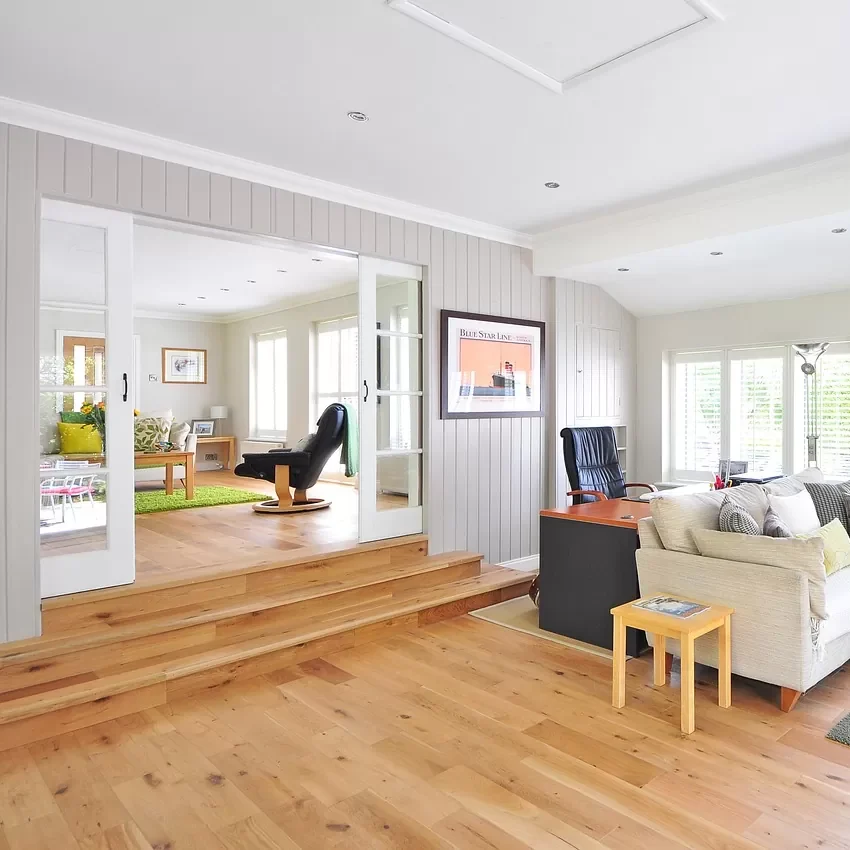
Floating floorboards have become one of the most popular flooring choices for Australian homeowners thanks to their affordability, versatility and ease of installation. Unlike traditional hardwood or tiles, floating floors aren’t nailed or glued directly to the subfloor. Instead, the boards lock together and ‘float’ over an underlay, which makes installation faster and less disruptive. This construction method not only saves time but also allows for a wider variety of materials, finishes and price points to suit almost any budget. Floating floorboards can replicate the look of natural timber at a fraction of the cost, while also offering options in laminate, vinyl and hybrid materials that are durable, low-maintenance and often resistant to moisture.
Because of their flexibility, floating floorboards are suitable for living rooms, bedrooms, hallways and even some kitchens, providing a sleek and modern finish. Many homeowners choose them when renovating because they can be installed over existing flooring in some cases, avoiding the cost of complete floor removal. However, like any home improvement, the total cost depends on several factors such as the type of material, the size of the area, the condition of the subfloor and the complexity of the layout. By understanding these variables, you’ll be able to set a realistic budget and choose the right option for your home.
How much does floating floorboard installation cost?

On average, floating floorboard installation in Australia costs between $40 and $100 per square metre, including both materials and labour. Laminate and vinyl options sit at the lower end of this range, while hybrid and engineered timber are priced higher.
In this guide, we’ll cover:
What affects the cost of floating floorboard installation
Average costs by material type
Hidden and additional expenses
Benefits of floating floors
How to save money on installation
How to find the right installer for your project
What Affects the Cost of Floating Floorboard Installation?
The first and most significant factor that affects cost is the type of material you choose. Laminate and vinyl floating floorboards are generally the most affordable options, while hybrid floors and engineered timber are more expensive due to their durability, design and higher quality finish. Premium brands or designer ranges also carry a higher price tag compared to standard products.
Subfloor preparation can also have a major impact on costs. If your subfloor is uneven, damaged or requires a moisture barrier, the installer may need to spend extra time levelling or repairing it before laying the boards. In some cases, old flooring may need to be removed, adding further labour and disposal fees.
The size and layout of the area influence the price as well. Larger rooms benefit from economies of scale, reducing the average per-square-metre cost, while smaller or irregularly shaped spaces often cost more per square metre due to the detailed cutting and fitting required. Stairs, trims and transitions between rooms also increase installation complexity and therefore cost.
Finally, labour rates and location make a difference. Installers in metropolitan areas usually charge more than those in regional areas, reflecting higher demand and operating expenses. Additional charges may also apply if the job site has limited access or requires extra travel.
In summary, costs are affected by:
Type of material (laminate, vinyl, hybrid, engineered timber)
Subfloor preparation and condition
Size, shape and complexity of the installation area
Labour rates and location
Average Cost of Floating Floorboard Installation in Australia
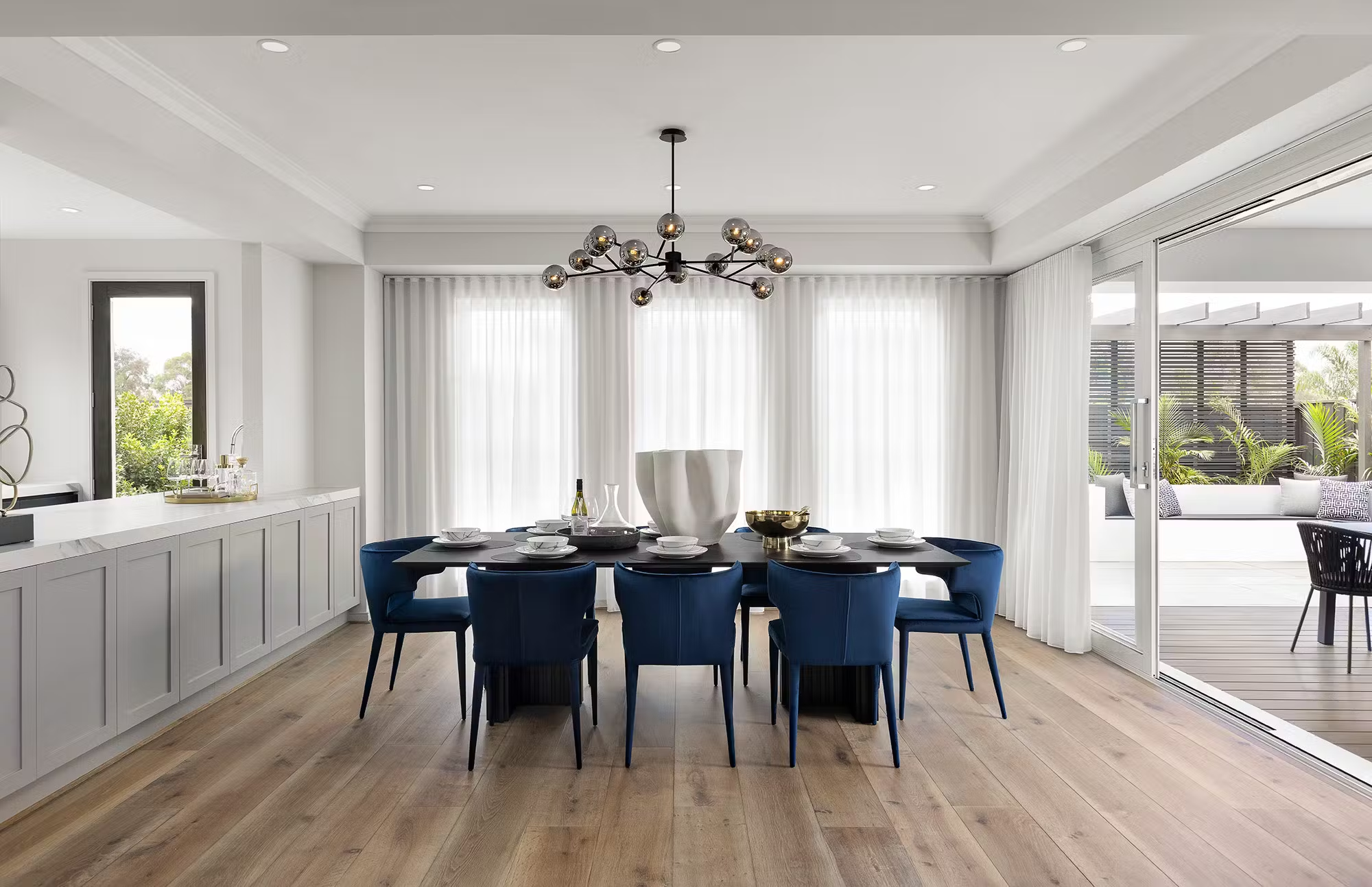
When budgeting for floating floorboard installation, it’s helpful to break down the costs into materials, labour, and additional items like underlay or preparation. Across Australia, a typical installation combining supply and labour generally falls between $25 and $100 per square metre, depending on the quality of materials and complexity of the job.
For example, basic laminate floating floorboards often come in at the lower end — around $25 to $60 per m² including installation. For vinyl floating boards or mid-range engineered options, you might see prices in the $50 to $90 per m² range. Higher-end engineered timber or designer boards can push costs toward $80 to $150+ per m², particularly if the finish is premium or the boards come from specialised species.
Labour alone for floating floors (i.e. the cost to install, excluding material) typically runs $30 to $40 per m², although in some areas it can be more depending on access, site conditions and whether extra work is required (such as trimming, transitions, or cutting to fit). In more straightforward jobs with a good subfloor and simple layout, installers may charge closer to $30 per m² as a base rate.
For larger rooms or open-plan areas, overall costs benefit from economies of scale — many of the fixed costs (setup, travel, clean-up) are spread across more square metres, reducing effective rate. On the other hand, small rooms with many corners or steps tend to incur higher per-m² labour because of the extra cutting and detail work.
These figures are a general guide. Your actual cost will depend on your location, the material you choose, how much subfloor work is needed, and the quality of finish you want. If you’d like, I can also produce a version tailored to your city or region to give a more precise estimate.
Floating Floorboard Costs by Type
Floating floorboards come in a variety of materials and constructions, each with its own cost profile. Below is a breakdown of common types and what you might expect to pay, depending on quality, design, and finish.
Laminate Floating Floorboards
Laminate is among the most affordable floating floor options. It consists of a high-density fibreboard (HDF) core with a printed design layer and protective coating. Because it’s manufactured and not natural wood, costs are lower and it’s easier to maintain. You’ll typically see laminate floating floors priced in the lower ranges — it’s often chosen when you want a wood-look finish at a budget price.
Engineered Timber Floating Floorboards
Engineered timber combines a real wood veneer layer over a plywood or composite core. This gives you the appearance of hardwood with more stability and resistance to changes in humidity or temperature. Because of the real wood surface and higher production costs, engineered timber usually commands a higher price than laminate, but still less than solid timber options.
Vinyl / Hybrid Floating Floors
Vinyl and hybrid options are increasingly popular for floating floors, especially in areas where moisture resistance is important (like kitchens, bathrooms or basements). These floors often use a composite core and a wear layer that mimics wood or stone textures. Vinyl and hybrid floating floors generally sit in the middle of the price spectrum — more expensive than basic laminate, but often more affordable than high-end engineered timber, especially when factoring in durability and water resistance.
Solid Timber Floating Floors (Click Systems / Floating Solid Hardwood)
Solid timber that is designed to be installed as a floating system is less common, but it is available in some cases (especially “click-lock” systems). Because of the cost of solid hardwood material and the premium finishes, these are generally the highest priced floating floorboard type. If you want the genuine feel of solid timber but still want the floating installation method, this will usually come at a premium.
Hidden & Additional Costs
When planning floating floorboard installation, it’s important to budget for more than just the boards themselves. One of the most common hidden expenses is subfloor preparation. If your existing floor is uneven, cracked or damp, it may need levelling or repairs before the boards can be laid. Underlay and moisture barriers are also essential in many cases to provide insulation, reduce noise and protect the floorboards from damage. Other additional costs can include removal and disposal of old flooring, adjustments to skirting boards or trims, and cutting boards to fit around stairs or awkward spaces. Labour rates can also increase if access is limited or the job requires extra time, so it’s always worth confirming what’s included in your installer’s quote.
Benefits of Floating Floorboards
Floating floorboards are a popular choice for homeowners because they offer a balance of affordability, style and practicality. Compared to solid timber or tile flooring, they are significantly cheaper and quicker to install, making them ideal for renovations on a budget. Despite being cost-effective, floating floors come in a wide variety of finishes, including wood-look laminate, vinyl, hybrid and engineered timber, giving you the ability to achieve almost any style. They’re also comfortable underfoot, especially when paired with quality underlay, which can reduce sound and improve insulation. Many floating floor options are durable and low-maintenance, resisting scratches, stains and everyday wear. For families or busy households, this combination of practicality and design flexibility makes floating floors an attractive long-term investment.
How to Save on Floating Floorboard Installation
There are several ways to reduce the overall cost of floating floorboard installation without compromising on quality. One effective strategy is to install larger areas at once, as this spreads fixed labour and set-up costs across more square metres, lowering the per-m² rate. Another tip is to choose cost-effective finishes such as laminate or vinyl, which replicate the look of timber but at a much lower price point. Preparing the subfloor in advance — for example, cleaning, levelling minor uneven spots, or removing old floor coverings — can also save labour time. Finally, always compare multiple quotes from licensed installers. Prices can vary significantly between tradies, and getting at least three quotes ensures you’ll find the right balance between cost and quality.
Finding the Right Floating Floorboard Installer
Installing floating floorboards might seem straightforward, but achieving a professional finish requires skill, the right tools and careful preparation. A qualified installer will make sure your subfloor is properly prepared, the underlay is laid correctly, and the boards are fitted neatly with the right spacing and expansion joints. This not only ensures the floor looks great but also prevents issues such as lifting, gaps or squeaking over time.
When choosing an installer, always check that they have experience with the specific type of floating floor you’ve selected, whether it’s laminate, vinyl, hybrid or engineered timber. Ask for a detailed written quote that includes materials, labour, underlay and any extras such as removal of old flooring or skirting adjustments. It’s also a good idea to look at examples of their previous work and ask about warranties on installation.
Finding the right flooring specialist doesn’t have to be time-consuming. The Tradie List connects you with trusted local installers who are experienced in fitting floating floorboards. By visiting thetradielist.com, you can compare multiple quotes, check qualifications and hire with confidence, knowing your new floor will be installed to the highest standard.

How Much Does Waterproofing Cost?
Cost Guides How Much Does Waterproofing Cost? $320 to $1,500

How Much Does It Cost To Move Plumbing Fixtures?
Cost Guides How Much Does It Cost To Move Plumbing