
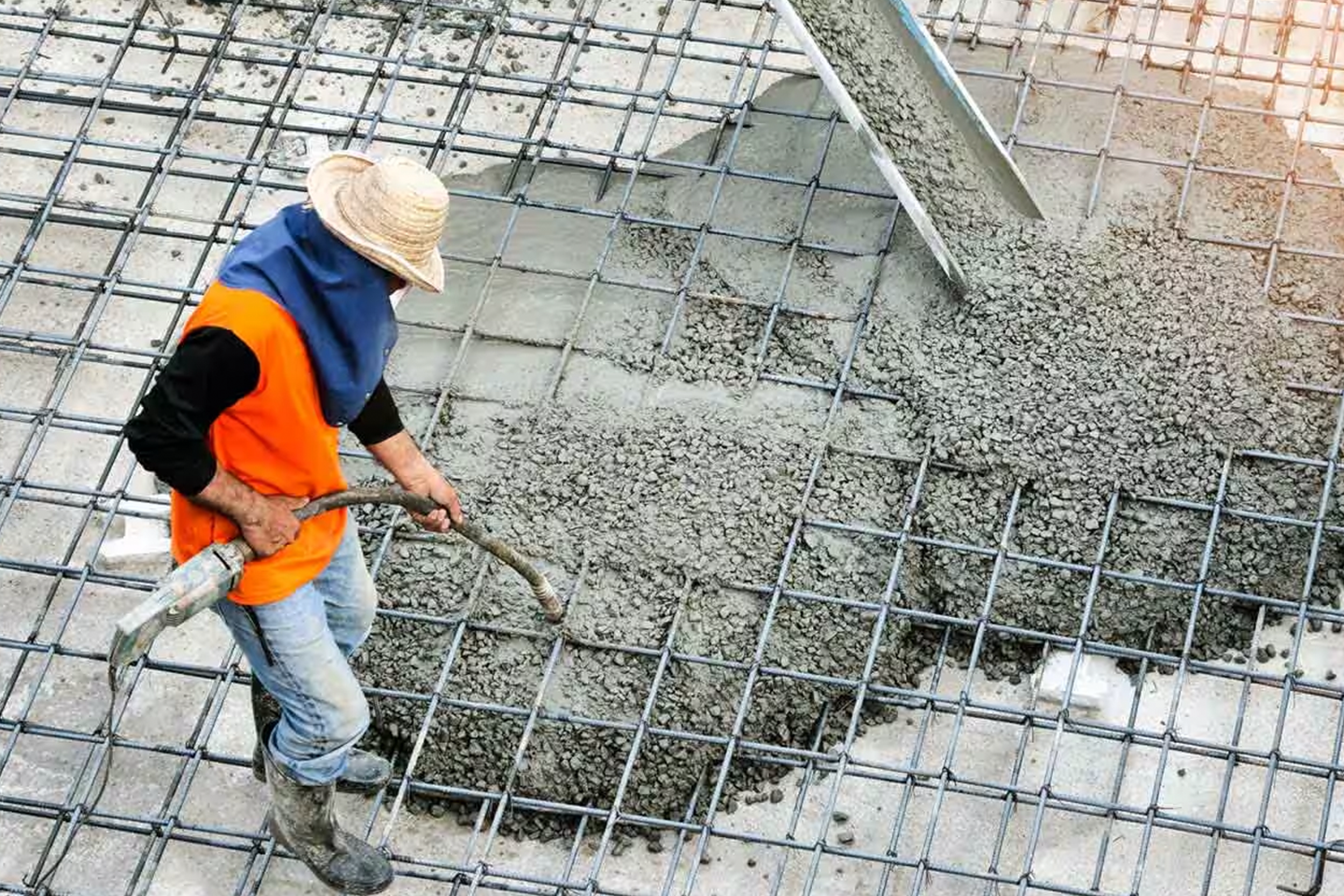

Complete Concreting Checklist
-
Remove vegetation, old concrete, and debris from the site. Ensure the ground is stable and compacted to prevent future settlement.
-
Use stakes and string lines to mark the boundaries and levels of the pour. Double-check measurements for accuracy.
-
Set up sturdy, level formwork to hold the concrete in place. Ensure joints are sealed to avoid leakage during pouring.
-
Lay compacted gravel or crushed stone as a sub-base to improve drainage and provide stability beneath the slab.
-
Position steel mesh or rebar according to design specifications. Support with spacers to maintain correct coverage depth.
-
Ensure reinforcement is tied and fixed firmly so it doesn’t shift during pouring and compaction.
-
Verify that the correct strength, slump, and additives are ordered or mixed to suit the project’s requirements.
-
Ensure mixers, wheelbarrows, vibrators, screeds, and finishing tools are clean and in good working condition before the pour begins.
-
Coordinate delivery schedules so the concrete can be placed and finished without delays that may cause cold joints.
-
Pour concrete in layers across the formwork, spreading evenly to prevent segregation and weak spots.
-
Use a vibrator or tamping method to eliminate air pockets and achieve full consolidation around reinforcement and edges.
-
Drag a straightedge across the surface to level concrete with the formwork and remove excess material.
-
Use a bull float or hand float to smooth the surface and embed aggregate slightly below the top layer.
-
Run an edging tool along slab edges to prevent chipping and create a clean, finished appearance.
-
Depending on requirements, apply a steel trowel for a smooth finish or broom for slip resistance.
-
Saw or tool joints at appropriate spacing to manage shrinkage cracks as the concrete cures.
-
Keep the surface moist using water spray, wet coverings, or curing compounds for at least 7 days to ensure proper strength gain.
-
Shield fresh concrete from rain, frost, and direct sunlight. Use covers or curing blankets if conditions are extreme.
-
Prevent foot traffic for at least 24–48 hours and heavy loads until the concrete has reached sufficient strength.
-
Inspect for surface uniformity, consistent texture, and alignment with project specifications.
-
Ensure moisture retention methods are still in place and no early cracking is visible.
-
Record mix details, curing duration, and inspection notes for project compliance and future reference.