

Edit Template

Fire Door Compliance Checklist

Fire doors are a critical part of any building’s passive fire protection system — but they’re only effective if properly installed, maintained, and regularly inspected. Whether you’re a property manager, builder, or compliance officer, our fire door checklist ensures every door meets legal standards and functions in a real emergency.

Enter your postcode to connect with licensed fire door specialists

Popular Searches : Plumbers, Pest Control, Lawn Mowing, Handyman,

Fire Door Compliance Checklist

Fire Door Compliance Checklist

Fire doors are one of the most important safety features in any building, acting as a critical barrier that slows the spread of fire and smoke to give occupants valuable time to escape. But simply having fire doors installed is not enough—they must be correctly fitted, regularly inspected, and properly maintained to meet strict compliance standards. Even minor issues such as gaps, damaged seals, or faulty hardware can severely reduce a fire door’s effectiveness in an emergency. Whether you are a property manager, business owner, or homeowner, ensuring your fire doors meet legal requirements is both a safety obligation and a compliance responsibility. This checklist is designed to guide you through the essential steps of inspection and maintenance so that your fire doors continue to perform as intended and provide maximum protection when it matters most.

Door and frame condition
  • Check that the fire door is free from cracks, holes, or warping that could compromise its ability to withstand fire and smoke.

  • Ensure the frame is firmly fixed, undamaged, and correctly aligned with the door to maintain its integrity in case of fire.

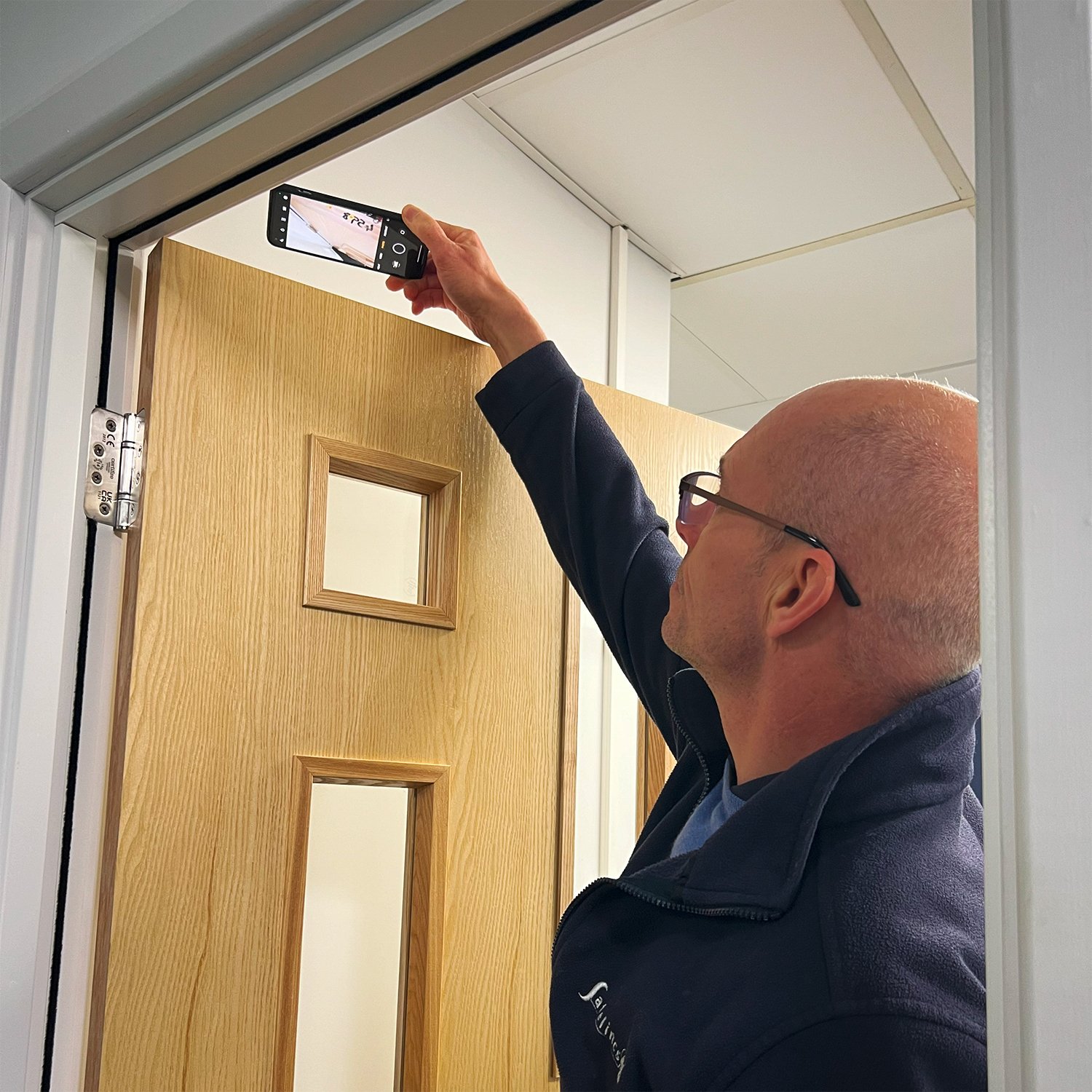
  • Measure the gaps around the door. Compliance requires that they are within acceptable limits, typically no more than 3mm at the sides and top, and no more than 10mm at the bottom.

Seals and hardware
  • Inspect seals around the door edges to confirm they are continuous, undamaged, and capable of expanding under heat to block smoke and fire spread.

  • Fire doors must be fitted with at least three heavy-duty hinges that are securely fixed with steel screws. Loose or missing screws must be replaced immediately.

  • Ensure the self-closing mechanism works smoothly, pulling the door fully shut from any open position without sticking or slamming.

Signage and accessibility
  • Fire doors must display clear signage, such as “Fire Door – Keep Shut” or “Fire Door – Keep Locked,” depending on their purpose and regulations.

  • Ensure there are no obstructions in front of or behind fire doors, allowing them to close fully and provide an effective barrier in an emergency.

  • Verify that no unauthorised modifications, such as drilled holes or non-compliant locks, have been made to the door or frame.

Inspection and documentation
  • Fire doors should be inspected at least every six months by a competent professional, and more frequently in high-traffic areas.

  • Keep up-to-date records of inspections, maintenance, and repairs to demonstrate compliance with fire safety regulations.

  • Any faults or damages identified during inspection must be repaired or replaced immediately to maintain compliance and safety.

Maintaining fire door compliance is not just about meeting legal requirements—it’s about protecting lives and property in the event of an emergency. By working through this checklist, you can ensure that every fire door in your building is functioning as it should, with the correct seals, hardware, signage, and inspection records in place. Small details such as door gaps, damaged frames, or faulty closers can make a critical difference when seconds matter most. Regular inspections, prompt repairs, and professional servicing provide peace of mind that your fire doors will perform their role effectively, giving everyone inside the building the best possible chance to evacuate safely.